The United Arab Emirates is on the brink of a transportation revolution. Etihad Rail Abu Dhabi, the country’s first national passenger railway network, is set to transform how residents and tourists travel across the Emirates. With operations beginning in 2026, this ambitious project promises to connect Abu Dhabi’s diverse landscapes, from coastal towns to desert oases, offering an entirely new way to experience the UAE.
What is Etihad Rail Abu Dhabi?
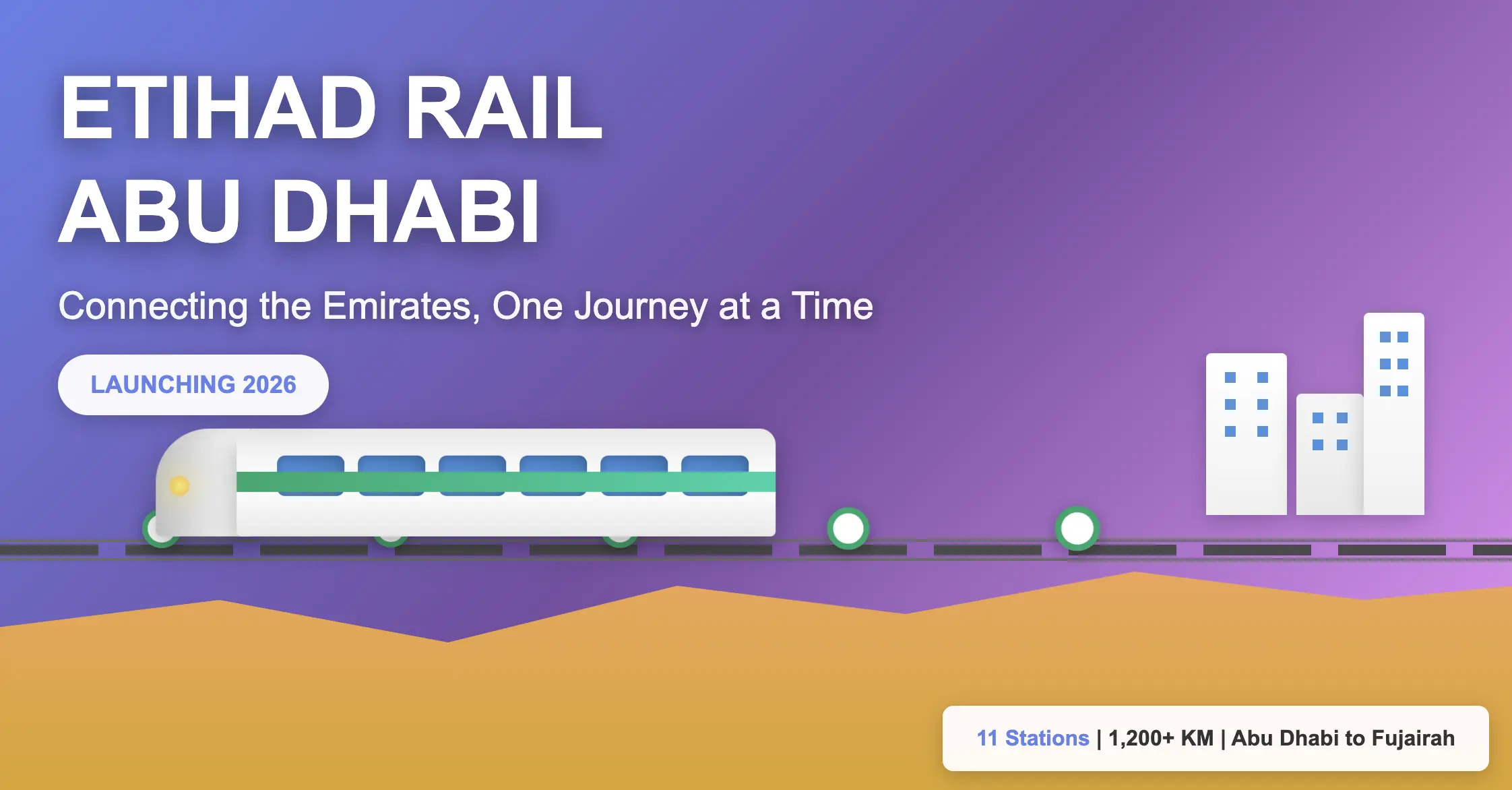
Etihad Rail represents the UAE’s ambitious vision for sustainable, efficient transportation. As the backbone of the country’s national railway system, Etihad Rail Abu Dhabi will link the capital emirate with neighboring regions through a network of 11 strategically located stations. The railway stretches across 1,200 kilometers, connecting major population centers and hidden gems alike.
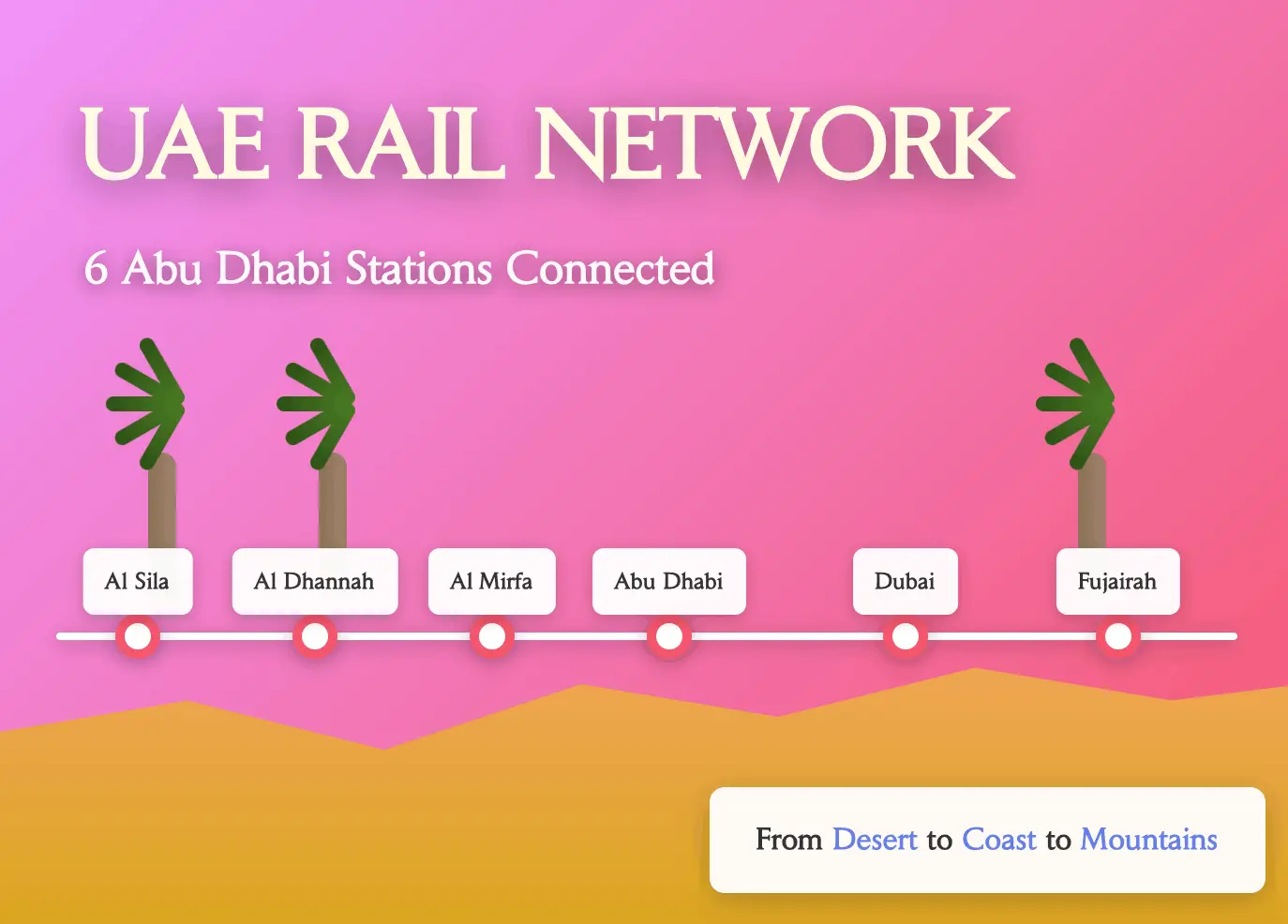
The Abu Dhabi segment of Etihad Rail is particularly significant, featuring six stations that showcase the emirate’s remarkable diversity. From the quiet coastal town of Al Sila near the Saudi border to the bustling Mohammed Bin Zayed City station in Abu Dhabi proper, the railway opens up unprecedented access to regions that have remained largely off the tourist map.
Key Facts & Figures
- 264 km Railway Corridor – Designed for a maximum operating speed of 200 km/h
- 93 Million m³ of Earthworks – One of the largest infrastructure earthwork volumes in the region
- ERTMS (ETCS Level 2) – First-ever implementation in the Middle East
- 235,000 m³ of Reinforced Concrete – Used across major civil and structural works
- Power Infrastructure – 11×11 kV and 1×33 kV substations with over 300 km of MV cables
- 18 Certified Buildings – O&M depot and multiservice buildings with sustainability certification
- 40+ Key Stakeholders – Strong coordination across public and private entities
- Global Collaboration – Multicultural workforce from 20+ countries
Abu Dhabi’s Six Etihad Rail Stations: What to Expect
1. Al Sila Station: Gateway to the Western Region
Located in the Al Dhafra region near the UAE’s border with Saudi Arabia, Al Sila station serves a community of approximately 12,000 residents. This coastal town, home to the border crossing at Ghuweifat, has long been one of Abu Dhabi’s best-kept secrets. With Etihad Rail Abu Dhabi connectivity, visitors can now easily explore local souqs and pristine beaches that have remained relatively untouched by mass tourism.
The Al Sila station represents more than just a transportation hub. It’s a gateway to cross-border travel, with potential future connections to Saudi Arabia’s expanding railway network, creating seamless travel opportunities across the Gulf region.
2. Al Dhannah Station: From Fishing Village to Industrial Hub
Once known as Ruwais, Al Dhannah has undergone a remarkable transformation from a sleepy fishing village to a thriving residential and industrial center. Located 250 kilometers west of Abu Dhabi city, this station serves the substantial workforce of the Abu Dhabi National Oil Company (ADNOC), which established a self-sufficient urban hub here in 1970.
The Etihad Rail Abu Dhabi connection to Al Dhannah makes commuting far more convenient for the thousands of professionals working in the oil and gas sector, potentially reducing road congestion and offering a comfortable alternative to long drives.
3. Al Mirfa Station: Abu Dhabi’s Coastal Treasure
Al Mirfa station provides access to what locals describe as one of Abu Dhabi’s best-kept secrets: Al Mirfa Beach. This former pearl diving and fishing community has evolved into a vibrant coastal destination while retaining its authentic charm. The station serves as a perfect jumping-off point for the annual Al Dhafra Watersports Festival, which draws enthusiasts from around the world for kiteboarding, wakeboarding, and surf-ski kayaking competitions.
With Etihad Rail connecting Al Mirfa to other parts of Abu Dhabi and the UAE, weekend beach getaways become effortless, opening up this pristine coastline to residents across the Emirates.
4. Madinat Zayed Station: Heart of the Desert
Located 180 kilometers from Abu Dhabi city, Madinat Zayed station offers access to one of the emirate’s most celebrated cultural events: the annual Al Dhafra Festival. This spectacular event features traditional camel races, beauty pageants, and authentic markets that showcase Bedouin heritage.
The Etihad Rail Abu Dhabi connection to Madinat Zayed is particularly significant for festival-goers and those seeking affordable housing options. The town’s peaceful residential community offers a stark contrast to the hustle of urban centers, and the railway makes it viable for professionals to live here while working in Abu Dhabi or Dubai.
5. Mezairaa Station: Gateway to the Empty Quarter
Perhaps one of the most culturally significant stops on the Etihad Rail Abu Dhabi network, Mezairaa station provides access to the Liwa Oasis and the legendary Empty Quarter (Rub’ al Khali). This region is steeped in Emirati heritage, home to the historic Mezairaa Fort built in the 1950s.
Adventure seekers will find Mezairaa an ideal base for desert activities including dune bashing, camel trekking, bird watching, and camping. The railway connection transforms what was once a challenging journey into an accessible adventure, making the UAE’s desert heartland available to anyone with a train ticket.
6. Abu Dhabi Central Station: The Urban Hub
The main Abu Dhabi station in Mohammed Bin Zayed City serves as the primary hub for the capital emirate. Strategically located near Musaffah, one of Abu Dhabi’s key industrial areas, this station is within easy reach of Mazyad Mall and Delma Mall, serving the substantial suburban population in this growing area.
For residents of Mohammed Bin Zayed City, the Etihad Rail Abu Dhabi connection offers seamless access to Dubai, Sharjah, and Fujairah without the stress of highway driving. The station’s location also makes it convenient for those working in Musaffah’s industrial zones to commute from other emirates.
How Etihad Rail Abu Dhabi Connects to the Broader Network
While Abu Dhabi boasts six of the eleven stations, Etihad Rail’s true power lies in its connectivity across the entire UAE. From Abu Dhabi, passengers can travel east to:
- Al Faya: A strategic freight and passenger hub between Abu Dhabi and Dubai
- Dubai (Jumeirah Golf Estates): Connecting to Dubai’s metro system for comprehensive urban mobility
- University City, Sharjah: Serving thousands of students and the academic community
- Al Dhaid: The oasis town famous for fresh produce and Friday markets
- Sakamkam, Fujairah: The eastern terminus near Fujairah town, connecting the Gulf coast to the Arabian Sea coast
This comprehensive network means Abu Dhabi residents can breakfast in the desert at Mezairaa, conduct business in Dubai by noon, and watch the sunset over Fujairah’s mountains—all in a single day, all by train.
Etihad Rail Map Overview
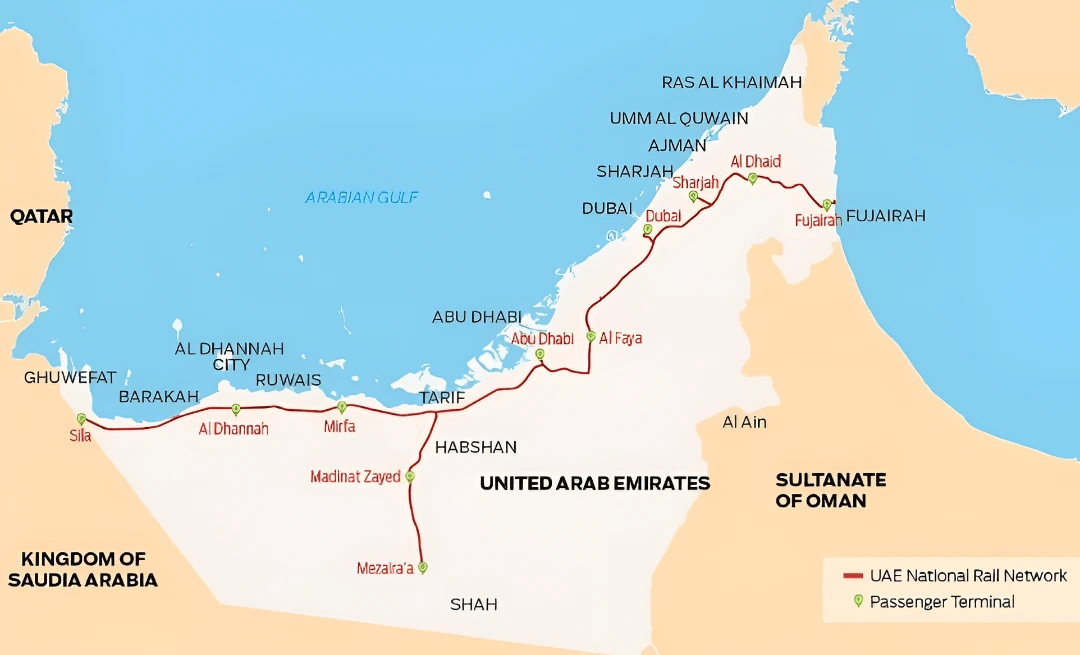
The Etihad Rail map clearly illustrates the UAE National Rail Network, showing how the railway connects major cities, industrial zones, and ports across the country. From Fujairah on the east coast to Al Ghuweifat on the Saudi border, the map highlights both passenger terminals and key freight corridors. This visual representation helps readers easily understand the scale, route alignment, and national importance of the Etihad Rail project.
Key highlights shown in the map:
- Passenger terminals in Abu Dhabi, Dubai, Sharjah, and Fujairah
- Freight connections to Ruwais, Al Dhannah, and industrial zones
- Seamless rail connectivity across all seven emirates
The Benefits of Etihad Rail for Abu Dhabi Residents
Environmental Impact
Etihad Rail Abu Dhabi represents a significant step toward the UAE’s sustainability goals. By providing an efficient alternative to road travel, the railway will substantially reduce carbon emissions. Each passenger train removes dozens of cars from the highway, contributing to cleaner air and reduced traffic congestion.
Economic Opportunities
The railway opens up new economic possibilities for Abu Dhabi’s western and southern regions. Towns like Al Sila, Al Mirfa, and Madinat Zayed gain improved connections to major economic centers, potentially spurring development, tourism, and investment in these areas.
For Abu Dhabi’s workforce, Etihad Rail creates new housing options. Professionals can choose to live in more affordable communities along the rail line while maintaining easy access to their workplaces in urban centers.
Tourism and Discovery
Perhaps the most exciting aspect of Etihad Rail Abu Dhabi is its potential to transform tourism. Hidden gems like Al Mirfa Beach, the Mezairaa Fort, and the festivals of Madinat Zayed become accessible day trips rather than overnight commitments. This convenience could significantly boost domestic tourism, encouraging UAE residents to explore their own country more thoroughly.
Time Efficiency
For those traveling between Abu Dhabi and Dubai, or Abu Dhabi and the Northern Emirates, Etihad Rail offers a productive alternative to driving. Passengers can work, relax, or simply enjoy the scenery rather than focusing on highway navigation. The railway journey becomes time reclaimed rather than time lost.
Etihad Rail Freight: Beyond Passenger Service
While passenger service generates excitement, Etihad Rail Abu Dhabi’s freight operations are equally transformative. The network is projected to move 20 million tons of material by 2030, serving industries across the emirate.
The Al Faya station, located between Abu Dhabi and Dubai, houses an Inland Container Depot that facilitates efficient freight movement. For Abu Dhabi’s industrial sectors, particularly in areas like Al Dhannah and Musaffah, the railway provides cost-effective logistics solutions that enhance competitiveness.
What to Expect: The Passenger Experience
While detailed passenger service specifications are still being finalized, Etihad Rail Abu Dhabi is expected to offer a modern, comfortable travel experience befitting the UAE’s reputation for world-class infrastructure. Based on the UAE’s track record with projects like the Dubai Metro, passengers can likely anticipate:
- Climate-controlled, comfortable carriages with ample seating
- Modern amenities including WiFi connectivity
- Facilities for families and passengers with special needs
- Integrated ticketing systems compatible with other UAE transportation networks
- Efficient boarding and security procedures
- Regular service frequencies to minimize wait times
Planning Your Journey: Routes and Connections
The Abu Dhabi segments of Etihad Rail create several logical journey patterns:
Coastal Route: Al Sila → Al Dhannah → Al Mirfa → Abu Dhabi offers a journey along the Arabian Gulf, perfect for beach lovers and those exploring the western region.
Desert Experience: The inland route through Madinat Zayed and Mezairaa provides access to authentic Emirati culture and desert landscapes.
Cross-Emirates Commute: The Abu Dhabi → Al Faya → Dubai → Sharjah → Fujairah route creates a direct link from the capital to the east coast, transforming what’s currently a two-to-three-hour drive into a relaxing train journey.
Integration with Existing Transportation
The success of Etihad Rail Abu Dhabi depends partly on integration with existing transportation networks. The Dubai station’s location near a metro station sets a precedent for multimodal connectivity. Abu Dhabi residents can expect:
- Bus connections from Etihad Rail stations to local neighborhoods
- Taxi and ride-sharing services at all major stations
- Potential future connections to Abu Dhabi’s planned metro system
- Park-and-ride facilities for those driving from areas without direct rail access
The Broader Vision: Cross-Border Connectivity
Etihad Rail Abu Dhabi represents more than domestic transportation. The Al Sila station’s proximity to the Saudi border positions it as a potential international gateway. Saudi Arabia is developing its own extensive railway network, and future connections could enable rail travel from Abu Dhabi to Riyadh, Jeddah, and beyond.
This vision aligns with broader GCC integration goals, potentially creating a Gulf-wide railway network that transforms regional travel and trade.
Etihad Rail Abu Dhabi :Looking Ahead: 2026 and Beyond
As Etihad Rail Abu Dhabi prepares for its 2026 launch, excitement builds across the emirate. This project represents decades of planning and billions in investment, all aimed at creating a more connected, sustainable, and accessible UAE.
For Abu Dhabi’s residents, the railway promises to change daily life in tangible ways. Commutes become more relaxing, weekend adventures become more accessible, and the emirate’s hidden gems become everyone’s backyard.
The railway also positions Abu Dhabi as a forward-thinking capital, embracing sustainable transportation while preserving access to the cultural heritage and natural beauty that make the emirate special. From the desert forts of Mezairaa to the coastal tranquility of Al Mirfa, from the industrial might of Al Dhannah to the urban energy of Mohammed Bin Zayed City, Etihad Rail ties together the many facets of Abu Dhabi into one cohesive, accessible experience.
Conclusion of Etihad Rail Abu Dhabi
Etihad Rail Abu Dhabi stands as one of the most significant infrastructure projects in the UAE’s history. By connecting six diverse stations across the emirate and linking Abu Dhabi to the broader national network, the railway creates unprecedented opportunities for travel, commerce, and discovery.
Whether you’re a daily commuter tired of traffic, a tourist eager to explore beyond the usual destinations, or a business professional seeking efficient logistics solutions, Etihad Rail Abu Dhabi offers something valuable. As 2026 approaches, the railway promises to transform not just how we travel, but how we experience the United Arab Emirates itself.
The future of Abu Dhabi transportation is on track, and it’s arriving soon. For More update Viravio.com.
Source: Khaleej Times – Etihad Rail latest stations, map & guide
Source: Gulf News – Etihad Rail passenger service guide: stations, routes, travel times

