Picture a moment that is familiar to any business with global ambitions. A company is ready to enter a new market. Someone runs the website copy, the product descriptions, and the support emails through one of the many AI tools now built into everyday business operations. The output looks clean. Everything ships within an afternoon. The launch goes live, traffic arrives, and then the numbers refuse to move. Visitors land, scroll, and leave. Support tickets keep asking questions that the localized FAQ supposedly already answered.
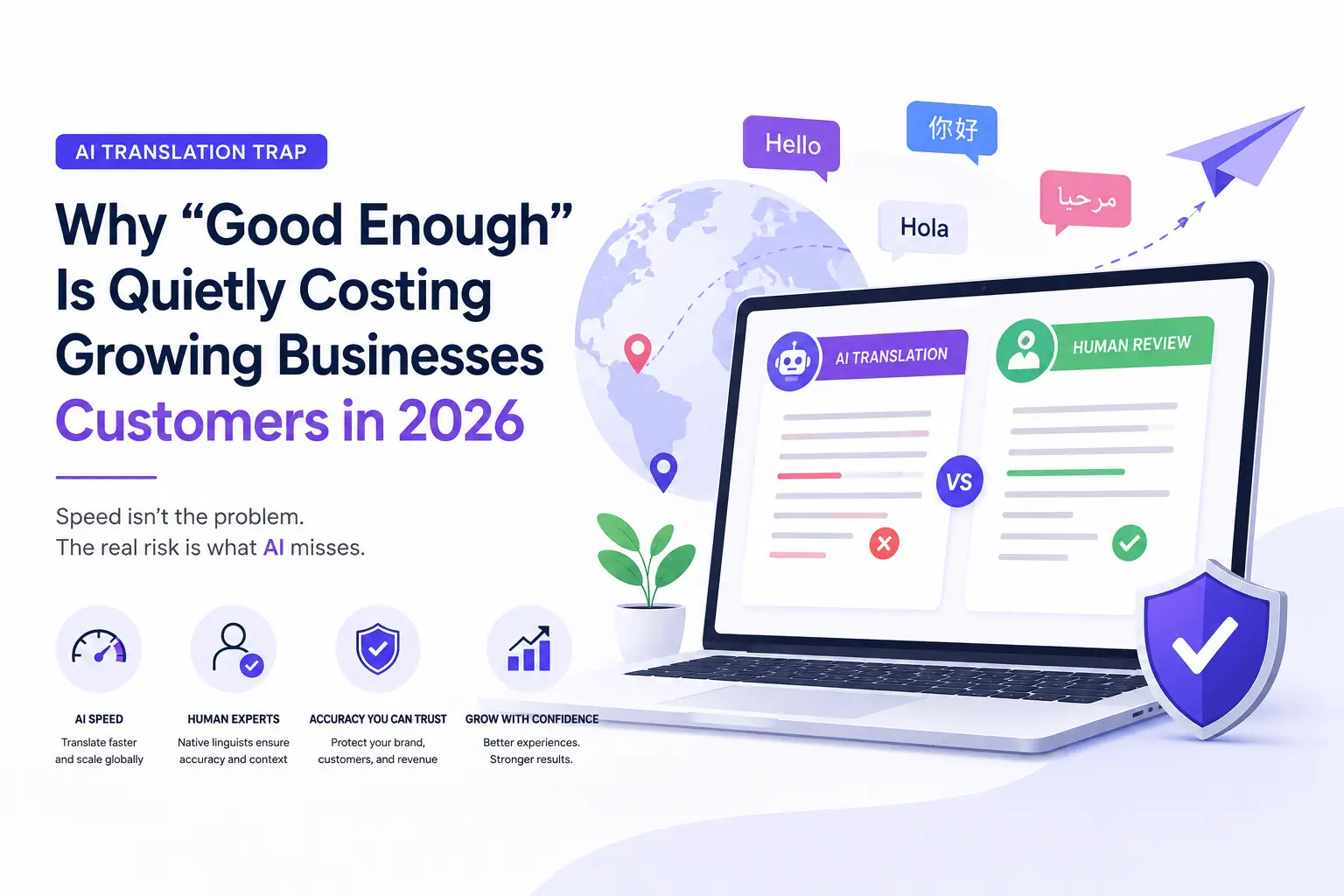
Nothing looks broken. That is exactly the problem. The promise of instant AI translation is real, and it has changed how quickly businesses can operate across borders. But that speed has created a blind spot. A translation that reads smoothly to the person who generated it can still quietly fail the customer it was meant for. In 2026, the gap between “looks translated” and “actually works in this market” has become one of the most expensive blind spots in global growth.
The Trouble With “Good Enough”
The problem starts with a word that sounds harmless: enough. The localization industry’s own analysts have noticed it. In its 2025 industry analysis, Nimdzi described how the acceptance bar for translation quality has been quietly lowered, partly because large language models make almost any text read fluently. Fluent and correct, however, are not the same thing. A sentence can be grammatically perfect and still send the wrong signal, miss a legal nuance, or describe a product in a way that no native speaker would actually trust.
Customers feel that gap even when they cannot name it. Research from CSA Research found that 76 percent of shoppers prefer to buy in their own language, and roughly four in ten say they will not buy from a website in another language at all. Those buyers are not grading grammar. They are deciding, within seconds, whether a brand feels like it belongs in their world. “Good enough” translation is the fastest way to feel foreign.
Three Places AI Translation Quietly Breaks
AI translation is genuinely impressive, and for low-stakes, high-volume content it is often the right call. The risk comes from using it everywhere without knowing where it tends to fail. Three failure points appear again and again.
- Specialized content. Legal terms, medical instructions, financial disclosures, and technical documentation carry meaning that a general model can flatten or reverse. A single mistranslated clause in a contract is not a typo. It is a liability.
- Cultural and contextual nuance. Idioms, tone, humor, and politeness norms rarely survive a direct machine pass. This matters even more for languages that do not map neatly onto English, including right-to-left languages such as Arabic, where formality, phrasing, and structure all shape the meaning a reader receives.
- Confidence without accuracy. AI tools rarely signal when they are wrong. They produce fluent output every time, which makes errors hard to catch. Even enthusiastic reviews of popular AI tools carry the same quiet caveat: verify anything that matters before relying on it. That warning is easy to skip when the text already looks finished.
The Real Question Is Not “AI or Human”
This is where most of the debate goes wrong. The question businesses keep asking is whether to use AI or a human. That framing is already outdated. The more useful question in 2026 is where the human sits in the workflow.
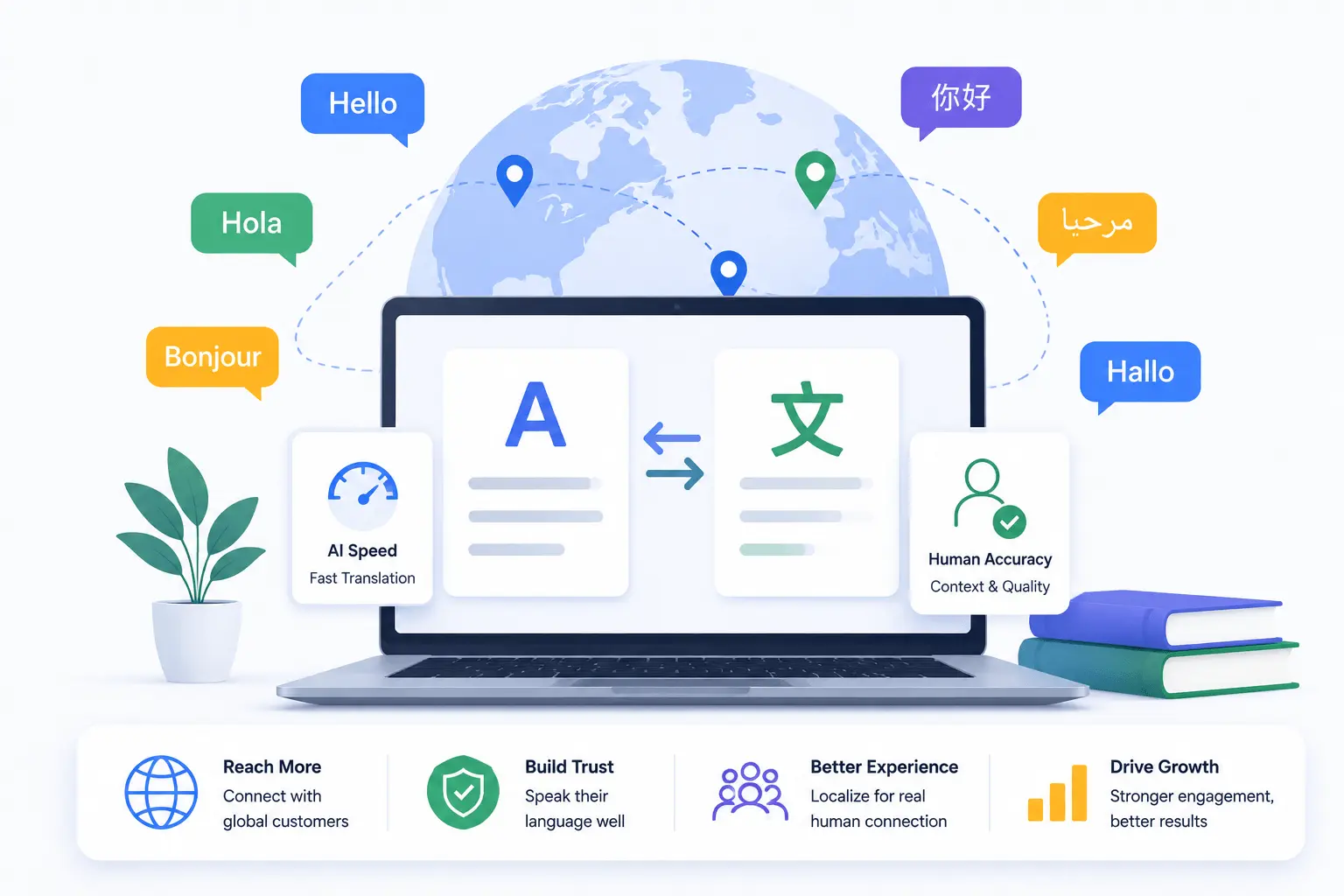
This is the principle behind what specialists call human-in-the-loop, or HITL. AI handles the heavy lifting of speed and scale, and trained human experts review, correct, and approve the output before it reaches a customer. The model is not removed, and neither is the expert. Each handles the part it is actually good at. The model accelerates the work. The human protects meaning, nuance, and risk.
What Human Oversight Looks Like in Practice
In practice, this hybrid model is becoming the operating standard for businesses that cannot afford to guess. Translation companies built around this approach pair AI translation with native, subject-matter expert linguists who own the final result. Tomedes, a professional translation company, structures its work this way across more than 270 languages, combining AI-assisted translation with certified human translators, a dedicated project manager on each project, and a one-year quality guarantee.
The distinction is not branding. It is accountability. When a human expert is responsible for the final text, someone is positioned to catch the mistranslated clause, the tone that reads as rude, or the product claim that quietly breaks a local regulation before a customer ever sees it.
“A language model can produce a fluent sentence in seconds, but fluency is not the same as accuracy,” says Rachelle, AI Lead at Tomedes. “The value of a human expert is not speed. It is knowing which sentence will quietly cost a client a customer, a contract, or their credibility, and correcting it before anyone else notices.”
A Four-Question Test Before You Trust an AI Translation
Business owners do not need to become localization experts to make smarter decisions. Before publishing AI-translated content, four questions separate the safe from the risky.
- What happens if this is wrong? If the answer involves legal exposure, safety, money, or reputation, route it through human review.
- Is this meant to persuade, or only to inform? Internal notes can tolerate raw AI output. Marketing, sales, and brand content cannot.
- Does this language or market carry nuance my team cannot check? If no one on the team reads the target language fluently, the AI output is unverified, not finished.
- Will a paying customer read this? Anything customer-facing deserves a human who is accountable for it.
Content that passes all four can often go straight from an AI tool. Anything that fails even one is a candidate for the hybrid approach.
The Bottom Line for 2026
The businesses that win across borders in 2026 will not be the ones that translate the fastest or the cheapest.
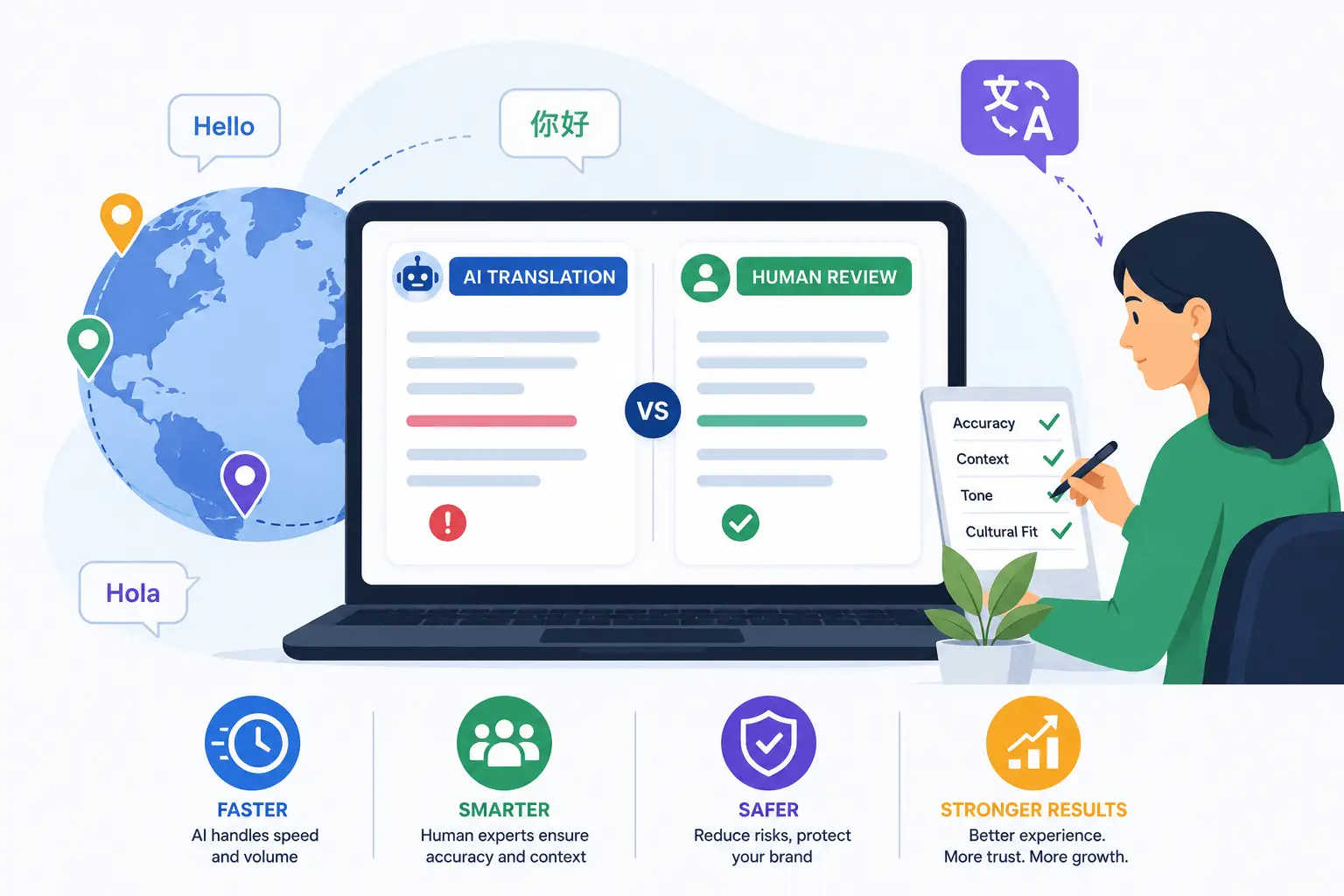
They will be the ones that understand the difference between content that can safely move at machine speed and content that needs a human standing behind it. AI has made translation effortless. It has not made judgment optional. The companies that grasp that distinction will sound like they belong in every market they enter. The ones that do not will keep wondering why their numbers refuse to move.